

























































A New Orleans biotechnology company that builds human tissue models for drug testing is planting its flag on the East Coast, pouring $656,000 into a new Charleston County, South Carolina facility expected to create 46 jobs. Obatala Sciences will keep its headquarters in New Orleans even as it opens its first operation outside the Gulf South, according to New Orleans CityBusiness.
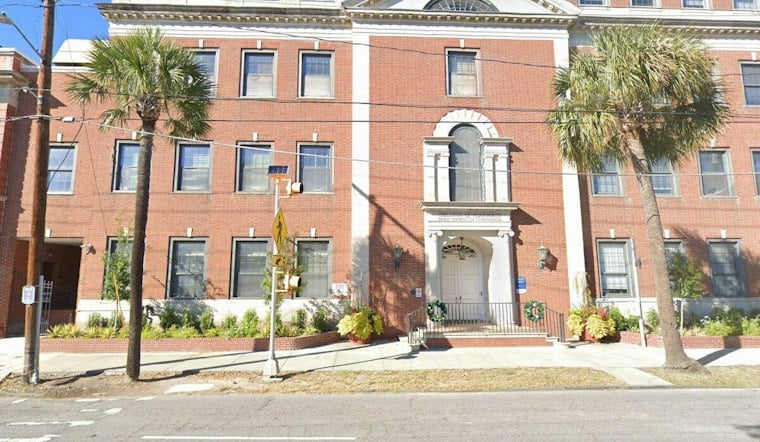
The company, which develops human-derived biomaterials and tissue models used in pharmaceutical research, will run its new facility out of Blue Sky Labs, a life sciences incubator on the Medical University of South Carolina's downtown Charleston campus, New Orleans CityBusiness reports. The South Carolina Department of Commerce made the expansion official on October 8, confirming that Obatala selected Charleston County for what it called the company's first East Coast operation, according to the South Carolina Department of Commerce.
Obatala co-founder and CEO Dr. Trivia Frazier leads the company, which is investing in new product development and pursuing pharmaceutical industry partnerships through the Charleston expansion. The Blue Sky Labs site will support pharmaceutical research, product development and industry partnerships, per the state commerce agency's announcement. Frazier holds dual undergraduate degrees in physics and biomedical engineering from Tulane University and Dillard University, a Historically Black University in New Orleans, and completed her Ph.D. in biomedical sciences at Tulane, according to Obatala Sciences.
What Blue Sky Labs Offers New Tenants
Blue Sky Labs itself opened in November 2024 inside a retooled former College of Pharmacy building at 280 Calhoun Street, providing more than 20 leasable wet-lab spaces across 10,000 square feet, the Medical University of South Carolina says. The South Carolina Research Authority offers relocation grants of up to $50,000, according to SCbio. That kind of financial cushion has made the facility a magnet for firms looking to extend their footprint into the Southeast without abandoning their home base.
Governor Henry McMaster and Commerce Secretary Harry M. Lightsey III both publicly backed the expansion, with the state noting that life sciences ranks among its three primary economic growth priorities, per the governor's office. South Carolina's life sciences sector generated $20.1 billion in economic impact and included more than 63,000 professionals, according to an economic impact report SCbio released in February.
The Science Behind the Move
Obatala's flagship products include ObaGel, a human-derived hydrogel, and ObaCell, a fat-on-a-chip tissue model used to study obesity, diabetes and other metabolic diseases, according to Louisiana Economic Development. The FDA Modernization Act 2.0, signed by President Joe Biden in December 2022, eliminated a 1938 federal mandate for animal testing in drug development and opened the door for the FDA to accept human-derived tissue models, per ALTEX. The regulatory change opened the door for FDA consideration of human-derived tissue models.
Obatala has built out its wet-lab capacity, according to Biz New Orleans.
New Orleans Keeps a Stake in the Growth
Even with the Charleston expansion underway, Obatala is keeping its headquarters and corporate decision-making in New Orleans. The move comes as local investors work to keep homegrown biotech firms rooted in the city even as they expand eastward: the Community Development Venture Capital Alliance and the New Orleans BioFund announced joint co-investments in March to support bioscience commercialization in New Orleans, where Obatala is headquartered, according to the New Orleans BioInnovation Center.
The expansion lands amid a broader stretch of momentum for the city's life sciences sector. Hoodline reported earlier this month that thousands of drug scientists would converge on New Orleans later that month for the AAPS PharmSci 360 conference, and the city has also seen other bio-incubator activity, including a new ovarian cancer lab from Beken Bio and a venture capital push tied to 1834 Ventures nearing its $20 million goal. Obatala's Charleston bet suggests the city's biotech sector is maturing enough to export its science, even as it fights to keep the headquarters and jobs that matter most close to home.





